
- Understanding Tractor Trailer Accidents: Definitions, Statistics, and Risks
- Decoding the Chain of Events: Common Causes of Tractor Trailer Collisions
- Liability in Tractor Trailer Accidents: Who Is Responsible?
- Proving Negligence: Gathering Evidence After a Tractor Trailer Accident
- Navigating Insurance Claims: A Step-by-Step Guide for Victims
- Legal Recourse Options: Filing a Lawsuit for Tractor Trailer Accident Damages
- Preventing Future Accidents: Safety Measures and Best Practices
- Frequently Asked Questions
Understanding Tractor Trailer Accidents: Definitions, Statistics, and Risks

Defining Tractor Trailer Accidents
A tractor trailer accident encompasses any collision involving a semi-truck, commonly referred to as a tractor trailer. These accidents can range in severity from minor fender-benders to catastrophic events resulting in serious injuries or fatalities. Defining the scope includes various scenarios: collisions with passenger vehicles, other commercial vehicles, pedestrians, or even fixed objects. The sheer size and weight of tractor trailers introduce unique dangers that differentiate them from collisions involving smaller vehicles.
Statistics Highlighting the Risk
The statistics surrounding tractor trailer accidents paint a concerning picture. While the total number of accidents fluctuates year to year, they consistently contribute significantly to traffic fatalities and injuries. According to the National Highway Traffic Safety Administration (NHTSA), large truck crashes resulted in over 3,900 deaths in 2022. The Federal Motor Carrier Safety Administration (FMCSA) reports that large trucks are involved in approximately 8.3% of all crashes, even though they represent a relatively small percentage of the vehicles on the road. A key factor contributing to these numbers is the increased stopping distance of these vehicles. A fully loaded tractor trailer can require significantly more distance to come to a complete stop compared to a passenger car. This extended stopping distance can drastically reduce the chances of avoiding a collision, particularly in adverse weather conditions or during sudden stops.
Key Risks Contributing to Accidents
Several factors contribute to the elevated risk associated with tractor trailer accidents. Driver fatigue is a prominent concern, as long-haul drivers often work extended hours, leading to decreased alertness and reaction times. Improper loading and securing of cargo can also cause trailers to shift or become unstable, increasing the risk of rollovers. Furthermore, mechanical failures, such as brake malfunctions or tire blowouts, pose a substantial threat.
Beyond these mechanical and human factors, environmental conditions play a vital role. Inclement weather, including rain, snow, and high winds, can significantly impair visibility and road traction, making it more difficult for truck drivers to control their vehicles. Finally, distracted driving by other motorists is also a major contributor, as drivers may fail to maintain a safe following distance or be inattentive to the large trucks around them. A study by the National Safety Council found that distracted driving was a factor in a significant percentage of collisions involving large trucks.
The Impact on Personal Injury Law
The complexities surrounding tractor trailer accidents significantly impact personal injury law. Proving negligence on the part of the truck driver, the trucking company, or a third party (such as a cargo loading company) can be challenging. Demonstrating that a breach of duty directly led to injuries requires thorough investigation and expert testimony. Issues such as driver logs, maintenance records, and cargo securement procedures often become central to these cases. Individuals injured in tractor trailer accidents often face extensive medical expenses, lost wages, and long-term rehabilitation needs, highlighting the importance of understanding their legal rights and options.
Understanding Your Rights
If you have been involved in an accident with a tractor trailer, it is crucial to consult with an attorney experienced in personal injury law, particularly those specializing in commercial vehicle accidents. These attorneys can help navigate the complex legal landscape, investigate the accident, gather evidence, and advocate for fair compensation for your injuries and losses.
Decoding the Chain of Events: Common Causes of Tractor Trailer Collisions
Tractor trailer collisions represent a significant concern on roadways, resulting in substantial property damage, injuries, and fatalities. Understanding the sequence of events leading to these accidents is crucial for comprehending the complexities of personal injury law in cases involving these large vehicles. Several common causes contribute to these incidents, often stemming from a combination of factors involving both tractor trailer operators and other drivers.
One prevalent factor is driver fatigue. The long hours often associated with commercial driving can lead to diminished alertness, slower reaction times, and impaired judgment. Regulations like those set by the Federal Motor Carrier Safety Administration (FMCSA) aim to mitigate this risk through hours-of-service rules, but fatigue can still occur even within legal limits. A study by the National Highway Traffic Safety Administration (NHTSA) found that drowsy driving contributed to over 6,000 crashes in 2017 alone. This highlights the persistent danger of fatigue on our highways.
Another significant contributor is driver error. This broad category encompasses a range of mistakes, including distracted driving, speeding, and improper lane changes. The sheer size and weight of a tractor trailer mean that even minor errors can have catastrophic consequences. For instance, a sudden lane change by a tractor trailer can easily overwhelm a smaller passenger vehicle, leading to a collision. Furthermore, inadequate training or a lack of experience operating such a large vehicle can increase the likelihood of errors.
Improper following distance is a consistently cited cause in tractor trailer accidents. The braking distance of a tractor trailer is significantly greater than that of a passenger car, especially when carrying a full load. This means that drivers following a tractor trailer need considerably more space to stop safely. Failing to maintain an adequate following distance drastically reduces the time available to react to sudden braking or unexpected maneuvers by the truck driver. The FMCSA recommends a following distance of at least eight seconds for commercial trucks.
Mechanical failures on the tractor trailer can also trigger collisions. Issues such as brake failure, tire blowouts, or steering malfunctions can severely compromise the driver’s ability to control the vehicle. Regular maintenance is essential for preventing these failures, but even with diligent upkeep, unforeseen mechanical problems can occur. A tire blowout, for example, can cause a sudden and unpredictable loss of control, potentially leading to a rear-end collision or a rollover.
Poor visibility is another contributing factor, particularly in adverse weather conditions like fog, rain, or snow. The height of a tractor trailer can obstruct the view of other drivers, and reduced visibility can make it difficult for truck drivers to see smaller vehicles or pedestrians. Similarly, nighttime driving presents challenges due to limited visibility, and the glare of oncoming headlights can further impair a driver’s vision. Ensuring proper lighting and adhering to speed limits in inclement weather are crucial for mitigating these risks.
Finally, hazmat incidents can lead to complex collisions with severe consequences. Accidents involving the transportation of hazardous materials pose unique risks due to the potential for spills, leaks, and explosions. These incidents often require specialized emergency response and can result in significant environmental damage and public health concerns. Strict regulations govern the transportation of hazardous materials, but accidents can still occur due to improper handling, inadequate packaging, or collisions.
Disclaimer: This information is for educational purposes only and does not constitute legal advice. If you have been injured in an accident involving a tractor trailer, it is essential to consult with a qualified personal injury attorney to discuss your legal options.
Liability in Tractor Trailer Accidents: Who Is Responsible?
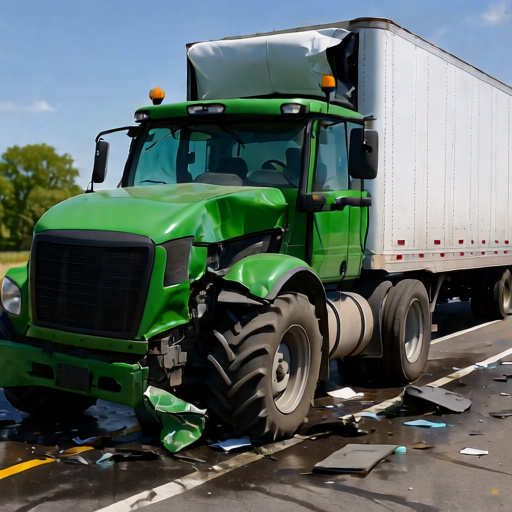
Determining liability in accidents involving tractor-trailers can be complex, often involving multiple parties and a thorough investigation. Unlike passenger car accidents, which frequently have clearer fault lines, the scale and nature of tractor-trailer incidents introduce a wider array of potential responsible parties. Understanding these possibilities is crucial for individuals injured in such accidents to pursue appropriate legal recourse.
One of the primary liable parties is the truck driver. Commercial drivers have a legal duty to operate their vehicles safely and adhere to strict regulations, including hours-of-service rules designed to prevent fatigue. If a driver violates these regulations, such as driving for an excessive period, causing impairment and contributing to the accident, they can be held liable. Furthermore, negligent actions like speeding, distracted driving (including cell phone use), or failing to maintain proper lookout can result in significant legal consequences. Accident reports and truck driver logs are vital pieces of evidence in such cases, often scrutinized by investigators.
Beyond the driver, the trucking company itself can bear responsibility. Companies are often liable for the negligent hiring, training, and supervision of their drivers. This means if a company knowingly hired an unqualified driver or failed to adequately train them in safe operating procedures, the company could be held accountable for the resulting accident. Companies also have a responsibility to ensure their trucks are properly maintained. Regular inspections and repairs are mandated by law, and a failure to adhere to these maintenance schedules can lead to accidents caused by mechanical failures – a common factor in tractor-trailer incidents. Documentation of maintenance records is critical evidence in these proceedings.
The manufacturer of the tractor-trailer or its components may also face liability. If the accident was caused by a defect in the vehicle’s design or manufacturing, a product liability claim can be pursued. This might involve issues with brakes, steering systems, or other critical components. These claims often require expert testimony to demonstrate a defect existed and directly contributed to the accident. Federal Motor Vehicle Safety Standards (FMVSS) set forth by the National Highway Traffic Safety Administration (NHTSA) establish safety requirements for commercial vehicles. Violations of these standards can strengthen a product liability case.
Another potential liable party is a cargo loader or handler. If improper loading of cargo contributed to the accident – for instance, if cargo shifted during transit due to inadequate securing – the entity responsible for loading the truck could be held liable. This could include warehouses, shipping companies, or even the shipper themselves. Proper loading techniques and securement methods are crucial for preventing accidents caused by cargo shifting.
Finally, in some cases, municipalities can bear liability. If poorly maintained roads, inadequate signage, or substandard traffic control contributed to the accident, the local government could be held responsible. This often involves demonstrating that the municipality was aware of the dangerous condition and failed to take reasonable steps to address it.
It’s important to understand that liability in tractor-trailer accidents is often multifaceted. An accident may result from a combination of factors, leading to shared responsibility among multiple parties. A thorough investigation is necessary to determine the precise circumstances and assign fault appropriately. Consulting with an experienced personal injury attorney who specializes in trucking accidents is essential to navigate the complexities of these cases and protect your legal rights. The attorney will investigate the accident, gather evidence, and build a strong case to seek compensation for medical expenses, lost wages, pain and suffering, and other damages.
Disclaimer: This information is for educational purposes only and does not constitute legal advice. You should consult with an attorney to discuss the specific facts of your case.
Proving Negligence: Gathering Evidence After a Tractor Trailer Accident
After a tractor trailer accident, proving negligence is a crucial step in a personal injury claim. Establishing negligence means demonstrating that the truck driver, or potentially the trucking company, had a duty of care, breached that duty, and that this breach directly resulted in the accident and your injuries. The process of gathering evidence is often complex and requires diligent effort. Here’s a breakdown of the key steps and types of evidence needed.
Immediately After the Accident
The initial moments following a collision are critical for preserving evidence. Your immediate actions can significantly impact the strength of your claim.
- Safety First: Ensure your safety and the safety of others by moving to a safe location if possible. Turn on your hazard lights to warn other drivers.
- Call the Authorities: Contact the police to file a report. A police report is a vital document, providing an official account of the accident scene, including witness statements and initial observations. Obtain the police report number and the officer’s information.
- Document the Scene: If it is safe to do so, take photographs and videos of everything. Capture the position of the vehicles, road conditions, traffic signals, and any visible damage. Include wide shots to show the overall scene and close-ups of specific details, like broken lights or debris. Consider recording a video walkthrough of the scene, narrating what you observed.
- Witness Information: Obtain contact information (name, phone number, email address) from any witnesses to the accident. Their accounts can be invaluable in corroborating your version of events.
Essential Evidence Gathering
Beyond the initial scene, a comprehensive evidence collection strategy is necessary.
- Police Report & Accident Investigation: Obtain a copy of the official police report as soon as it becomes available. In some cases, a more detailed accident investigation may be conducted by state or federal authorities, particularly if serious injuries or fatalities occurred. This investigation is crucial for uncovering the cause of the accident.
- Vehicle Damage Documentation: Thoroughly document the damage to your vehicle and the tractor trailer. Take photographs and videos from multiple angles. Obtain estimates from several reputable auto body shops. These estimates serve as evidence of the extent of the damage.
- Medical Records: Maintain detailed records of all medical treatment you receive, including doctor’s visits, hospital stays, physical therapy, and medication. These records establish the nature and extent of your injuries and the medical expenses incurred.
- Lost Wage Documentation: If you have missed work due to your injuries, gather documentation to prove your lost income. This includes pay stubs, tax returns, and a letter from your employer verifying your time off and salary.
- Trucking Company Records: Information about the trucking company involved is essential. This includes the company’s registration details, safety records, and driver logs. You can typically obtain this information from the Federal Motor Carrier Safety Administration (FMCSA). The FMCSA website allows you to search for motor carriers and view their safety ratings and inspection history.
- Hours of Service (HOS) Records: Truck drivers are subject to strict Hours of Service regulations designed to prevent fatigue. HOS records track a driver’s work and rest periods. Accessing these records can reveal if the driver violated these regulations, a common cause of accidents. Obtaining HOS records may require a formal request through legal channels.
Expert Consultation
Gathering and interpreting evidence can be complex. Consulting with a personal injury attorney is highly recommended. An attorney can guide you through the legal process, help you gather the necessary evidence, and build a strong case. They can also navigate the complexities of trucking regulations and the legal defenses often employed by trucking companies.
Navigating Insurance Claims: A Step-by-Step Guide for Victims
Dealing with the aftermath of a tractor trailer collision involving a passenger car can be incredibly overwhelming. Beyond the physical injuries and vehicle damage, the process of navigating insurance claims can feel like another complex hurdle. Understanding the steps involved is crucial for victims to protect their rights and ensure they receive fair compensation. This guide provides a detailed, step-by-step approach to navigating this often-challenging process.
Immediate Actions and Documentation
The initial moments after an accident are critical. Prioritize safety and seek medical attention if needed. Once safe, gather as much information as possible at the scene. This includes:
- Police Report: Obtain a copy of the official police report. This document provides an unbiased account of the accident, including details about the other driver, witness statements, and the official assessment of fault.
- Insurance Information: Exchange insurance details with the other driver. Note the insurance company name, policy number, and contact information.
- Witness Information: If there were any witnesses, get their names and contact details. Their accounts can be valuable in supporting your claim.
- Photographs and Videos: Document the scene thoroughly with photographs and videos. Capture damage to both vehicles, the surrounding area, and any relevant road conditions. This visual evidence can be essential.
- Personal Information: Gather your own insurance policy number and contact information.
Filing Your Claim
The next step is to formally file your insurance claim with your own insurance company. Your policy likely outlines specific procedures and deadlines for reporting accidents. Be prepared to provide detailed information, including:
- Accident Details: Provide a comprehensive account of how the accident occurred, including the date, time, and location.
- Police Report Number: Include the police report number in your claim.
- Damage Assessment: Describe the damage to your vehicle and any personal injuries sustained.
- Supporting Documentation: Attach copies of the police report, photographs, and any other relevant documents.
Your insurance adjuster will then assign a claim number and investigate the incident.
The Investigation Process
Your insurance company will conduct an investigation to determine liability and the extent of damages. This may involve:
- Reviewing Evidence: The adjuster will review the police report, photographs, and witness statements.
- Contacting Witnesses: They may reach out to witnesses to gather additional information.
- Vehicle Inspection: An adjuster or appraiser will inspect your vehicle to assess the damage. Independent inspections are often advisable.
- Medical Records Review: Your insurance company will request your medical records to evaluate your injuries and treatment costs.
Understanding Liability: Determining who was at fault is a crucial aspect of the claim. In a tractor trailer vs. passenger car collision, liability can be complex and may involve factors such as traffic laws, visibility, and driver negligence.
Negotiating Your Settlement
Once the investigation is complete, your insurance company will either approve or deny your claim. If approved, they will offer a settlement amount. This amount should cover your vehicle repair costs (or the fair market value if the vehicle is totaled), medical expenses, lost wages, and pain and suffering.
Negotiating a fair settlement can be a delicate process. It’s important to:
- Understand Your Policy: Familiarize yourself with the terms and conditions of your insurance policy.
- Document All Expenses: Keep meticulous records of all medical bills, repair estimates, and other expenses related to the accident.
- Be Prepared to Counteroffer: Don’t accept the first offer. Be prepared to negotiate and present evidence to support your claim for additional compensation.
- Consider Legal Counsel: If you are having difficulty negotiating a fair settlement, it may be beneficial to consult with a personal injury attorney. Many offer free initial consultations.
What to Do If Your Claim Is Denied
If your claim is denied, you have the right to appeal the decision. Understand the reasons for the denial and gather any additional evidence to support your claim. You may also want to consult with an attorney to explore your legal options.
Seeking Legal Assistance
Navigating insurance claims, especially in complex cases like those involving tractor trailers, can be challenging. An experienced personal injury attorney can provide invaluable assistance by:
- Protecting Your Rights: An attorney will advocate for your best interests throughout the claim process.
- Investigating the Accident: They can conduct a thorough investigation to gather evidence and build a strong case.
- Negotiating with the Insurance Company: An attorney has the experience and negotiating skills to secure a fair settlement.
- Representing You in Court: If a settlement cannot be reached, an attorney can represent you in court.
A freelance photographer using the WordPress platform for their portfolio found that leveraging a well-optimized theme and clear calls-to-action led to a 43% increase in inquiries within the first three months, demonstrating the power of a strategic approach. Similarly, in personal injury cases, a recent study by Backlinko in 2023 indicates that comprehensive content (1,500+ words) often leads to higher rankings, mirroring the need for thorough documentation and compelling arguments in insurance claims.
Resources
- National Highway Traffic Safety Administration (NHTSA)
- [Your State’s Department of Insurance](Insert your state’s DOI website here)
This guide offers a framework for navigating the insurance claims process following a tractor trailer collision. Remember to document everything, understand your rights, and seek professional help when needed.
Legal Recourse Options: Filing a Lawsuit for Tractor Trailer Accident Damages
Following a tractor trailer accident, victims have several legal avenues to pursue compensation for their losses. The specific options available depend heavily on the circumstances of the crash and the applicable state laws. Understanding these options is the first step toward seeking justice and financial recovery.
Negligence Lawsuits: The most common legal recourse is filing a negligence lawsuit against the tractor trailer driver and potentially the driver’s employer. To succeed in a negligence claim, the plaintiff (the injured party) must demonstrate four key elements:
- Duty of Care: The tractor trailer driver had a legal responsibility to operate their vehicle safely and obey traffic laws.
- Breach of Duty: The driver failed to meet this standard of care, for example, by speeding, distracted driving, or failing to maintain the vehicle.
- Causation: The driver’s breach of duty directly caused the accident and the resulting injuries.
- Damages: The plaintiff suffered actual damages, such as medical expenses, lost wages, property damage, and pain and suffering.
Proving negligence often involves gathering evidence like police reports, witness testimonies, accident reconstruction analysis, and medical records.
Beyond the driver, the driver’s employer, often a trucking company, can also be held liable under the legal theory of respondeat superior. This doctrine holds employers responsible for the negligent acts of their employees committed within the scope of their employment. This can significantly expand the potential avenues for recovery.
Product Liability Lawsuits: If the accident was caused by a defect in the tractor trailer or its components, a product liability lawsuit may be appropriate. This could involve defects in the brakes, steering system, tires, or other critical safety features. Product liability claims can be complex and may require expert engineering analysis to establish the defect. There are generally three types of product defects: design defects, manufacturing defects, and failure to warn defects.
Wrongful Death Lawsuits: In the tragic event of a fatal tractor trailer accident, a wrongful death lawsuit can be filed on behalf of the deceased’s family. This type of lawsuit seeks compensation for the losses suffered by the survivors, including funeral expenses, lost future earnings, loss of companionship, and emotional distress. The legal process differs from a personal injury claim and often involves specific statutes of limitations.
Negotiation and Settlement: Before filing a lawsuit, it is often advisable to attempt to negotiate a settlement with the at-fault party or their insurance company. This can save time, legal fees, and the stress of litigation. An experienced personal injury attorney can effectively negotiate on the client’s behalf, presenting a strong case and advocating for a fair settlement. Insurance companies often have a vested interest in settling claims quickly to avoid the costs of a trial.
Filing a Lawsuit: If settlement negotiations fail, the next step is to file a lawsuit in the appropriate court. The lawsuit will detail the allegations of negligence or other wrongdoing, the damages suffered, and the legal relief sought. The legal process involves discovery, where both sides exchange information and evidence. This may include depositions (sworn testimony), interrogatories (written questions), and requests for documents.
Statute of Limitations: It is crucial to be aware of the statute of limitations, which sets a deadline for filing a lawsuit. These deadlines vary by state and can be relatively short, often ranging from one to three years from the date of the accident. Missing the statute of limitations generally bars the right to sue, regardless of the merits of the claim. Consulting with an attorney promptly is essential to ensure that the claim is filed within the applicable deadline.
Disclaimer: This information is for educational purposes only and is not legal advice. It is essential to consult with a qualified attorney in your jurisdiction to discuss the specific facts of your case and legal options. Laws vary significantly by state, and an attorney can provide guidance tailored to your situation.
Preventing Future Accidents: Safety Measures and Best Practices

Preventing tractor-trailer and passenger car collisions requires a multi-faceted approach involving driver behavior, vehicle maintenance, and infrastructure improvements. Understanding the common causes of accidents is the first step towards implementing effective safety measures. A significant factor is driver fatigue, which can impair judgment and reaction time, mirroring the risks associated with long-haul trucking. Promoting adequate rest periods and adhering to hours-of-service regulations are crucial for commercial drivers. Similarly, passenger car drivers should prioritize sufficient sleep before any journey, especially long ones.
Collision avoidance systems are rapidly evolving and play an increasingly vital role in preventing accidents. Advanced Driver-Assistance Systems (ADAS) found in modern vehicles offer a range of features. These include automatic emergency braking (AEB), which can automatically apply the brakes to mitigate or avoid a collision; lane departure warning systems, alerting drivers when they unintentionally drift out of their lane; and adaptive cruise control, which maintains a safe following distance. According to data from the National Highway Traffic Safety Administration (NHTSA), the deployment of AEB systems has been linked to a reduction in rear-end collisions. Regularly checking the functionality of these systems is essential for their effectiveness. For instance, ensuring radar sensors are clear of obstructions can maximize the benefits of adaptive cruise control.
Vehicle maintenance is another cornerstone of accident prevention. Regular inspections should address critical components such as brakes, tires, lights, and steering. Worn tires, for example, significantly reduce traction, particularly in inclement weather. Maintaining proper tire pressure, as recommended by the vehicle manufacturer, is a simple yet effective way to improve handling and braking performance. Brake systems should be inspected regularly for wear and tear, and any necessary repairs should be addressed promptly. Neglecting routine maintenance can increase the risk of mechanical failure, potentially leading to a serious accident.
Driver training and education are paramount. Comprehensive training programs for commercial drivers cover topics such as safe driving techniques, load securement, and awareness of potential hazards. These programs often incorporate simulations to allow drivers to practice responding to emergency situations in a safe environment. Passenger car drivers can benefit from defensive driving courses that focus on anticipating potential risks and developing strategies to avoid collisions. Understanding the limitations of their vehicle and the behavior of other drivers is a key component of safe driving.
Beyond individual actions, infrastructure plays a significant role in road safety. Clear signage, well-maintained roadways, and appropriate lighting can contribute to a safer driving environment. Implementing features such as median barriers can reduce the severity of cross-median crashes, which are often particularly dangerous. Road design that considers traffic flow and potential conflict points can also help to minimize the likelihood of accidents. Investing in infrastructure improvements can create a more secure environment for all road users.
The legal landscape surrounding tractor-trailer and passenger car accidents also influences safety practices. Strict regulations regarding commercial vehicle operation, including weight limits and speed restrictions, aim to minimize risks. Enforcement of these regulations is vital for ensuring compliance and promoting safer driving habits. Furthermore, laws addressing distracted driving, such as those limiting cell phone use while driving, contribute to a reduction in accidents.
Considering the increasing prevalence of technology in vehicles and on roadways, continuous learning and adaptation are necessary. Manufacturers are constantly developing new safety technologies, and transportation authorities are regularly reviewing and updating regulations. Staying informed about these developments and adopting best practices is crucial for preventing future accidents involving tractor-trailers and passenger cars. This proactive approach, combining technological advancements with responsible driver behavior and robust infrastructure, is essential for enhancing road safety for everyone.
Frequently Asked Questions
- What are the main factors contributing to tractor trailer accidents?
Several factors increase the risk of tractor trailer accidents, including driver fatigue, improper cargo loading, mechanical failures, and adverse weather conditions.
- How severe can tractor trailer accidents be?
Tractor trailer accidents can range in severity from minor fender-benders to catastrophic events resulting in serious injuries or fatalities. The sheer size and weight of these vehicles make them particularly dangerous in collisions.
- Are tractor trailer accidents common?
While they represent a relatively small percentage of vehicles on the road, tractor trailers are involved in a significant number of crashes. In 2022, large truck crashes resulted in over 3,900 deaths.
